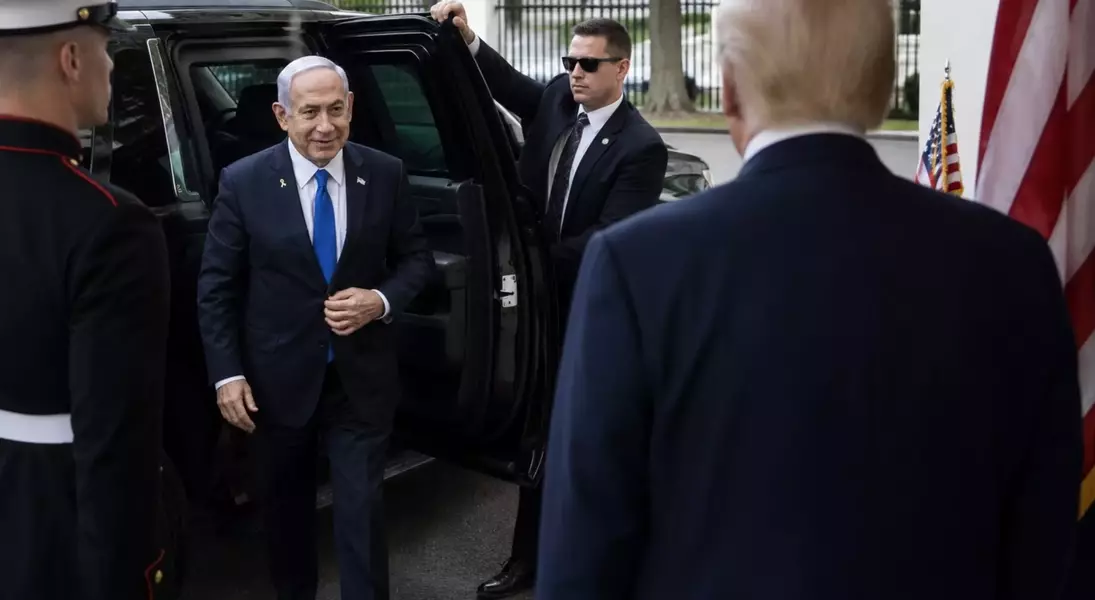
President Trump and Israeli Prime Minister Netanyahu are set to convene at the White House to deliberate on critical aspects of the US-Israel alliance. This high-level meeting occurs amidst a backdrop of escalating regional tensions, particularly concerning Iran. Israel has publicly stated its intent to avoid initiating aggression in any potential US-Iran hostilities, unless explicitly prompted by the United States. Concurrently, Trump is weighing significant military options against Iran and actively working towards expanding diplomatic ties in the Middle East through initiatives like the Abraham Accords.
The upcoming discussions are poised to cover the nuances of regional security and the future trajectory of US engagement in the Middle East. Trump's steadfast support for Israel's security interests remains a cornerstone of his foreign policy, even as he encourages the reduction of Israeli military presence in Syria and Lebanon to facilitate broader strategic objectives. Furthermore, the meeting highlights the interconnectedness of regional stability, as evidenced by the proposed linkage between a US-Saudi nuclear agreement and the normalization of relations between Saudi Arabia and Israel. These complex issues underscore the multifaceted nature of the alliance and the delicate balance required to navigate geopolitical challenges.
US-Israel Strategic Alignment and Regional Security Discussions
The impending meeting between President Trump and Israeli Prime Minister Netanyahu underscores the enduring strategic alignment between the United States and Israel, particularly in the volatile Middle Eastern landscape. The discussions will primarily focus on fortifying this alliance amidst heightened tensions with Iran. Israel has articulated a cautious stance, emphasizing that it would not be the initiator of any military action against Iran unless a direct request is made by the U.S. This position highlights Israel's reliance on American strategic leadership while also reflecting its own assessment of regional stability. The talks are crucial for coordinating defense strategies and ensuring both nations are in lockstep regarding potential threats.
During their White House encounter, Trump and Netanyahu are expected to delve into detailed conversations about regional security, including Iran's nuclear ambitions and its destabilizing activities. President Trump's unwavering support for Israel's security remains a key element of his administration's foreign policy. Concurrently, Trump has reportedly urged Netanyahu to consider scaling back Israel's military presence in neighboring Syria and Lebanon. This suggestion is part of a broader American strategy aimed at streamlining regional objectives and potentially reducing the complexity of military engagements. The meeting will serve as a platform to refine these strategies, ensuring that the US-Israel alliance continues to effectively address evolving security challenges in the region.
Expanding Peace Accords and Reshaping Middle East Diplomacy
A significant dimension of the upcoming meeting involves President Trump's efforts to broaden peace initiatives in the Middle East, specifically through the expansion of the Abraham Accords. A crucial component of this strategy is the potential linking of a major US-Saudi nuclear agreement with Saudi Arabia's normalization of relations with Israel. This ambitious diplomatic maneuver aims to create a more integrated and stable regional architecture by fostering deeper ties between Israel and Arab nations. Netanyahu's role in these discussions is pivotal, as his leadership is essential for navigating the complex political and social dynamics involved in achieving broader regional acceptance.
President Trump has consistently advocated for increased cooperation and normalization among Middle Eastern countries, viewing it as a pathway to long-term stability and economic prosperity. The proposed nuclear deal with Saudi Arabia, contingent on its recognition of Israel, exemplifies this approach. Such a development would represent a significant foreign policy achievement, further solidifying Israel's position in the region and potentially paving the way for other Arab states to follow suit. The dialogue between Trump and Netanyahu will therefore not only address immediate security concerns but also lay the groundwork for transformative diplomatic shifts, reinforcing the commitment to expand peace and foster new alliances across the Middle East.