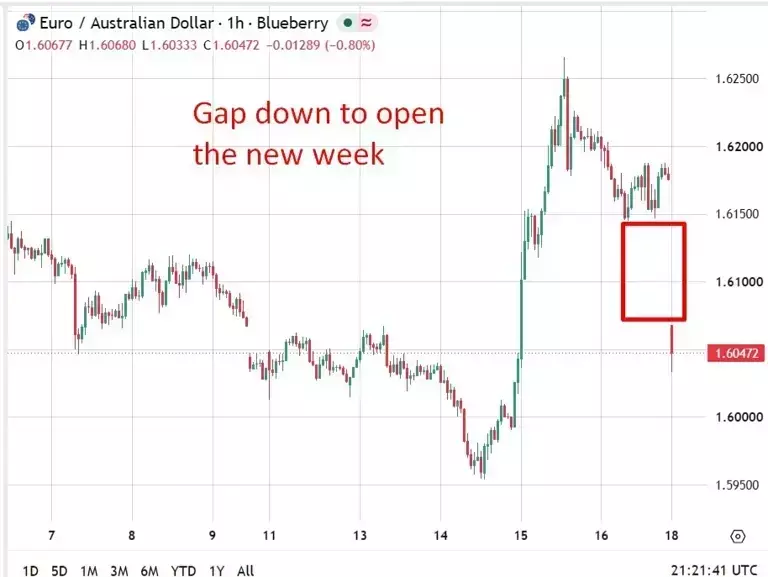
The Euro is experiencing a decline against the Australian Dollar, influenced by a confluence of challenging developments across Europe. These factors include domestic unrest in France, heightened security risks in the Black Sea region following drone incidents, and escalating trade tensions with the United States over satellite internet services. This weakening of the Euro comes at a time of thin liquidity in early Asian trading, which may amplify market reactions. The situation's true impact will become clearer as European markets open, with particular attention on French government bond spreads and the Euro's performance against the US Dollar to determine if these events are perceived as transient shocks or long-term risks. Concurrently, the Australian Dollar is benefiting from the Euro's woes, with local market focus turning to upcoming remarks from a Reserve Bank of Australia official, which could provide independent direction for the currency.
Several European challenges are currently exerting downward pressure on the Euro. The most prominent is the social unrest in France, where widespread protests have led to significant arrests and injuries, highlighting deep-seated societal discontent and raising questions about the government's ability to respond. This internal instability, compounded by looming political events, creates uncertainty for the Eurozone's second-largest economy. Additionally, a heightened security alert in the Black Sea region, following drone incidents involving Romania and subsequent NATO discussions, introduces geopolitical risk. Adding to these concerns are transatlantic trade disagreements, specifically a US warning regarding potential retaliation if the EU restricts Starlink's market access, further straining economic relations. These combined factors are contributing to a cautious outlook for the Euro, favoring currencies perceived as more stable, such as the Australian Dollar.
European Instability Weighs on the Euro's Value
The Euro has seen a notable depreciation against the Australian Dollar in early trading, primarily driven by a series of unsettling developments across Europe. Social unrest in France, marked by widespread protests, arrests, and property damage, has underscored deep societal dissatisfaction and raised concerns about the nation's political and economic stability. This internal turmoil, coupled with the French government's limited capacity to implement fiscal measures, has created an environment of uncertainty that negatively impacts investor confidence in the Euro. The forthcoming presidential election in 2027 adds another layer of political risk, suggesting that the current instability could have prolonged consequences for the Eurozone.
Beyond France's domestic issues, two additional factors are contributing to the Euro's weakness. Firstly, security concerns have escalated on Europe's eastern flank following incidents involving drones in Romanian airspace over the Black Sea, prompting an urgent meeting of NATO allies. This adds a geopolitical risk premium to the Euro, reflecting broader regional instability. Secondly, transatlantic trade relations are facing new strains after the United States issued a warning to the European Union concerning potential retaliatory measures if the EU proceeds with plans to limit Starlink's spectrum access. These multiple headwinds collectively paint a challenging picture for the Euro, leading to a flight of capital towards relatively safer assets like the Australian Dollar, particularly in thinly traded early market sessions where such shifts can be magnified.
Australian Dollar Benefits from Euro's Weakness
The Australian Dollar is currently experiencing gains against the Euro, largely due to the collective negative sentiment surrounding European events rather than significant independent drivers. In the absence of fresh, impactful economic news from Australia, the currency's upward movement is primarily a reflection of the Euro's struggles. The limited liquidity during early Asian trading hours, with only New Zealand's major financial center fully operational, tends to exaggerate price movements, amplifying the perceived strength of the Australian Dollar in response to European vulnerabilities.
However, the local economic landscape in Australia may soon provide its own impetus for the currency. Investors are keenly awaiting a scheduled address by Reserve Bank of Australia Assistant Governor Christopher Kent at the Commonwealth Bank's Global Markets Conference. Any comments from Kent pertaining to the monetary policy outlook or the broader conditions affecting the Australian currency could introduce a new, domestic-driven factor into its valuation. Such remarks would offer the Australian Dollar an opportunity to trade on its own fundamentals, potentially detaching its performance from being solely a beneficiary of the Euro's ongoing political and economic headwinds, and establishing a more independent trajectory in global currency markets.