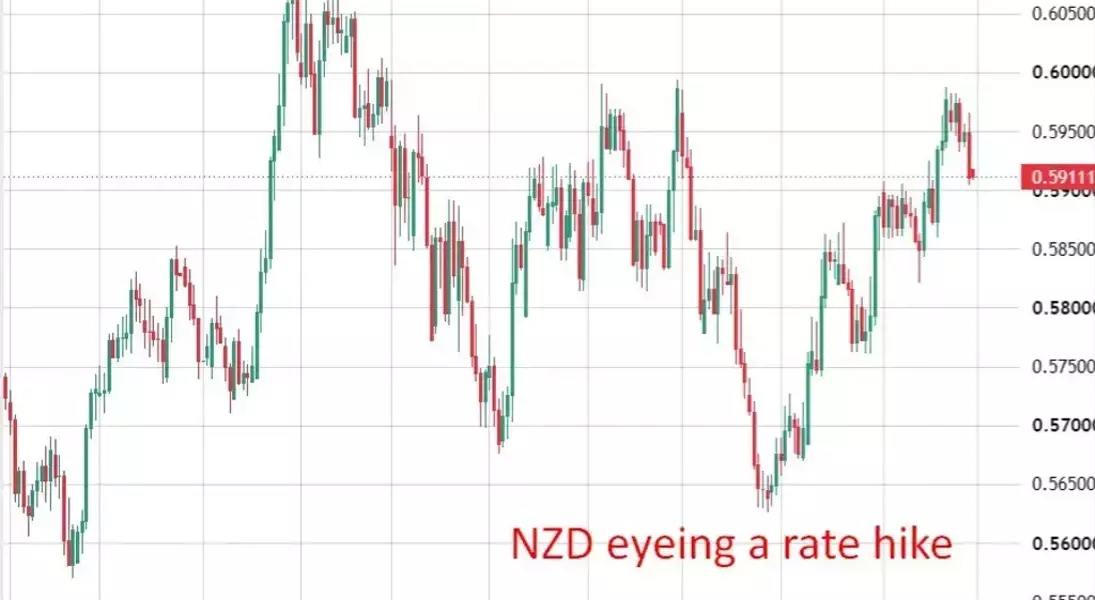
The Reserve Bank of New Zealand's (RBNZ) Shadow Board has expressed a divided opinion regarding the potential Official Cash Rate (OCR) adjustment scheduled for this week. A slight majority of members are leaning towards a 25 basis point increase, bringing the OCR to 2.75%. However, a notable portion of the board prefers to keep the rate steady at 2.50%, citing concerns about the nation's economic landscape. This internal debate within the independent advisory body highlights the complexities facing the RBNZ as it seeks to manage inflation while supporting a delicate economic recovery. Market observers are keenly awaiting the central bank's official statement, which is expected to provide critical insights into its future monetary policy direction.
This week's RBNZ decision is widely anticipated by financial markets, with many economists already factoring in a 25 basis point hike. The cautious forward guidance that may accompany such a move will be crucial in shaping market reactions. Any indication of a more aggressive tightening path could lead to a significant appreciation of the New Zealand dollar, while a decision to hold rates or a more dovish tone could temper its performance. The Shadow Board's split decision underscores the ongoing balancing act between controlling inflationary pressures and fostering economic growth, a challenge central banks globally are grappling with.
RBNZ Rate Hike Prospects and Market Expectations
The NZIER Shadow Board's recent findings indicate a lean towards a 25 basis point increase in the Official Cash Rate (OCR) to 2.75% at the upcoming RBNZ meeting on September 2. This potential hike would mark an extension of the RBNZ's tightening cycle, which recommenced in July. The majority view among the Shadow Board aligns with the consensus among bank economists, who largely expect this adjustment. However, the internal division within the board, with several members advocating for maintaining the current 2.50% rate due to sluggish economic activity and moderating inflation expectations, suggests that the market should not fully discount alternative outcomes. The key market-moving elements will likely be the RBNZ's accompanying OCR track projections and any forward guidance regarding future policy moves, particularly for October. A hike delivered with cautious guidance would likely result in a modest impact on the New Zealand dollar, whereas an unexpected hold or a more aggressive tightening signal could lead to more significant market volatility.
The Reserve Bank of New Zealand is poised to make a critical monetary policy decision this week, with the NZIER Shadow Board signaling a probable 25 basis point increase in the Official Cash Rate (OCR) to 2.75%. This move, if enacted, would be a continuation of the RBNZ's efforts to curb inflation, which reached 3.9% in the June quarter, aiming to bring it back within the desired 1% to 3% target range. Despite the widespread expectation of a hike, the Shadow Board's divided stance underscores the nuanced economic environment. Members supporting a hold emphasize the subdued domestic economic activity and the recent easing of inflation expectations, suggesting that further tightening might unduly strain an already fragile economy. Conversely, those advocating for a hike stress the persistence of high inflation and the necessity of steering the OCR towards a neutral stance. The RBNZ's forward guidance, particularly on whether future rate adjustments will be data-dependent or pre-committed, will be closely scrutinized by investors. The market's reaction will hinge on the degree to which the RBNZ's statement aligns with or deviates from these prevailing expectations.
Shadow Board's Divergent Views and Future Policy Outlook
The NZIER's Monetary Policy Shadow Board's latest assessment reveals a split opinion on the optimal path for New Zealand's Official Cash Rate (OCR). While just over half of its members recommend a 25 basis point increase to 2.75% at the RBNZ's September 2 meeting, a significant minority believes the OCR should remain at its current level of 2.50%. This divergence stems from differing interpretations of current economic indicators. Proponents of a hike highlight persistent inflation levels and the ongoing need to normalize the OCR. In contrast, those advocating for a pause point to signs of subdued domestic economic activity and a recent moderation in inflation expectations, suggesting that the economy may not yet be robust enough to withstand further tightening. This internal debate provides valuable insight into the complex considerations influencing monetary policy decisions and signals a cautious approach from the RBNZ.
Looking ahead, the independent Shadow Board members generally concur that the OCR will need to rise further over the coming year, with projections typically ranging between 3% and 3.25%. This long-term outlook aligns with external bank forecasts, which anticipate the RBNZ will indicate a similar tightening trajectory while maintaining flexibility regarding the pace of future adjustments. The board's preference for gradual increases reflects a desire to balance inflation control with support for the economic recovery. The RBNZ's decision on September 2 will be critical in setting the tone for future monetary policy, particularly concerning whether it will signal an additional increase at the October Monetary Policy Review. The Shadow Board's independent analysis, with each participant assigning probability weightings to various policy actions, offers a comprehensive perspective that will undoubtedly contribute to the broader discourse surrounding the RBNZ's upcoming announcements and its broader strategy for navigating the prevailing economic challenges.