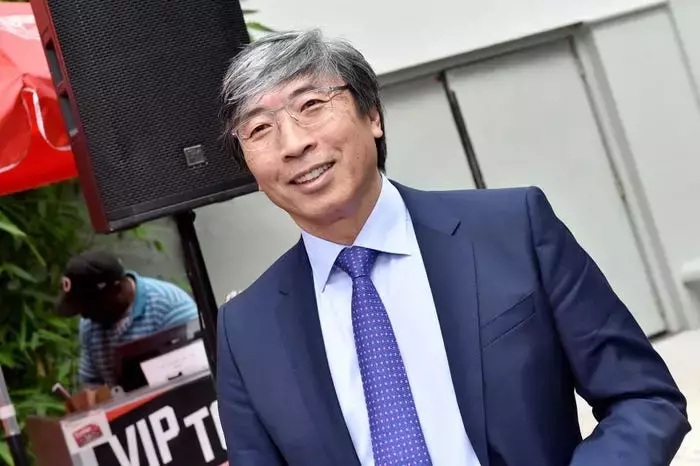
In a groundbreaking announcement that reverberated throughout the media industry, Patrick Soon-Shiong, the affluent proprietor of the Los Angeles Times, declared his intention to transition the newspaper into a publicly traded entity. This strategic maneuver, slated for completion within the coming year, aims to broaden the ownership base and foster a more inclusive relationship between the esteemed publication and its readership. Soon-Shiong, a distinguished figure in both business and scientific research, conveyed his vision during an appearance on \"The Daily Show with Jon Stewart,\" emphasizing a desire to \"democratize\" the newspaper's control. Such a shift could redefine traditional media ownership models, inviting a new era of public engagement and financial transparency for a cornerstone of American journalism.
This initiative builds upon Soon-Shiong's 2018 acquisition of the LA Times, which he undertook through his investment vehicle, Nant Capital, thereby assuming the role of executive chairman. His background, shaped by experiences in apartheid-era South Africa where newspapers served as vital sources of information and inspiration, profoundly influences his current outlook on media. He views this public offering as an opportunity to ensure that the voice of the populace is authentically represented and amplified through the press. The transition to a publicly traded company would place the LA Times among a select group of major news organizations, like The New York Times Co., that operate under public ownership, potentially offering a new pathway for sustainability and community involvement in an evolving media landscape.
A Vision for Public Empowerment in Journalism
Patrick Soon-Shiong's decision to launch a public offering for the Los Angeles Times represents a profound commitment to the principles of open access and community stewardship in the realm of news dissemination. His intent is not merely to alter the financial framework of the institution but to fundamentally reshape its relationship with the public it serves. By inviting broader investment and ownership, he envisions a future where the newspaper's direction is more directly influenced by, and accountable to, the very people who rely on it for unbiased information and a platform for their collective voice. This shift could serve as a powerful exemplar for other media entities grappling with the evolving challenges of financial viability and public trust in an increasingly fragmented information ecosystem.
This transformative step is deeply rooted in Soon-Shiong's personal history and his conviction in the indispensable role of a free and accessible press. Having experienced firsthand the power of print media during his formative years in South Africa, where it provided a lifeline of knowledge and a beacon of hope, he understands the profound impact newspapers can have on a society. His aspiration for the LA Times transcends mere commercial success; it extends to fostering an environment where accurate reporting and diverse perspectives are not only preserved but actively championed by a broad base of stakeholders. The \"democratization\" of the LA Times, through a public listing, is thus conceived as a mechanism to fortify its independence, enhance its civic function, and ensure its continued relevance as a vital public resource in the modern era.
Transforming Media Ownership Models
The impending initial public offering of the Los Angeles Times under Patrick Soon-Shiong's stewardship signifies a potentially pivotal moment in the trajectory of media ownership. This move diverges from the traditional private ownership structures prevalent in much of the newspaper industry, proposing instead a model where the public can directly participate in the financial future of a major journalistic enterprise. Such a shift carries implications not only for the economic stability of the LA Times but also for the broader discourse on how news organizations can best serve their communities while navigating complex market dynamics. It introduces a compelling alternative that could inspire other privately held media outlets to consider similar paths, fostering greater transparency and public investment in the future of journalism.
This strategic financial restructuring positions the LA Times alongside a select cohort of prominent news entities, such as The New York Times Co., that have embraced public ownership. This path, while presenting its own set of challenges, also offers unique advantages, including potentially greater access to capital for innovation and expansion, as well as enhanced accountability to a diverse investor base. Soon-Shiong's background as a successful businessman and medical innovator provides a distinctive perspective, suggesting that a public model could inject new vigor and resilience into the newspaper's operations. The success of this endeavor will undoubtedly be closely observed, as it holds the potential to chart a new course for how major newspapers can sustain their crucial role in informing and engaging the public in the digital age.