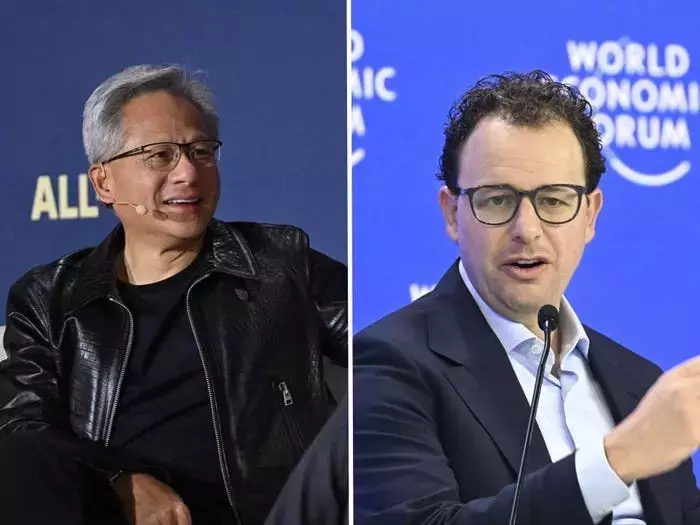
A sharp disagreement has emerged between two prominent figures in the artificial intelligence sector, highlighting contrasting philosophies on the direction and regulation of this transformative technology. At the heart of the dispute are allegations of monopolistic intent cloaked in safety concerns, met with forceful denials and an appeal for collaborative, ethical advancement.
This ongoing verbal exchange underscores the growing tension within the AI industry regarding its societal impact and the path forward for its development. As AI continues to evolve at a rapid pace, the approaches championed by these industry leaders could significantly shape future policy, innovation, and competition.
The Stance on AI Development and Control
The recent clash between Anthropic's CEO, Dario Amodei, and Nvidia's CEO, Jensen Huang, centers on fundamentally different perspectives regarding artificial intelligence development. Huang previously implied that Amodei's emphasis on AI safety was a strategy to gain industry dominance, suggesting Amodei believed his company alone should be entrusted with creating AI. This sparked a strong rebuttal from Amodei, who dismissed such claims as entirely baseless and a deliberate misrepresentation of his true intentions.
Amodei's vision for AI progress, which he terms a 'race to the top,' is rooted in fostering a competitive environment where companies strive for the highest standards of safety and ethical conduct. He argues that this approach, unlike a 'race to the bottom' driven by rapid feature deployment, ensures that the most responsible and ethical AI practices become the industry benchmark. Anthropic's initiatives, such as advocating for governmental testing of AI models for national security and promoting transparency standards, are presented as concrete steps towards this ethical framework, rather than attempts at market manipulation.
Differing Philosophies on Safety and Innovation
Amodei passionately argues against the notion that his calls for AI safety and responsible development are thinly veiled attempts at industry control. He explicitly stated that his company has never suggested they should be the sole developers of this technology. Instead, he advocates for a 'race to the top' where all companies prioritize safety and ethics, leading to a collectively beneficial outcome for society. This perspective emphasizes that a focus on robust safeguards and transparent practices will ultimately drive superior innovation and ensure the responsible integration of AI into daily life. He views the accusation from Nvidia as a deliberate and damaging mischaracterization, highlighting the importance of accurate representation in such critical industry discussions.
Conversely, Nvidia's response stresses the importance of an open and unhindered AI ecosystem, where innovation can flourish through the contributions of many. They suggest that any form of 'regulatory capture,' which could limit participation to a select few, would inevitably stifle creativity, compromise security, and undermine the democratic nature of AI development. Nvidia's spokesperson affirmed their support for responsible AI but cautioned against measures that could inadvertently create monopolies under the guise of safety. This divergence illustrates the delicate balance between ensuring AI safety and promoting widespread innovation and accessibility, a key challenge facing the rapidly evolving AI landscape.